Picture Archive & Historical Portraits
Skip to main content
  • Menu
  • Artists
  • Artworks
  • Image Licensing
  • Notable Sales
  • Philip Mould Gallery
  • Contact
Menu
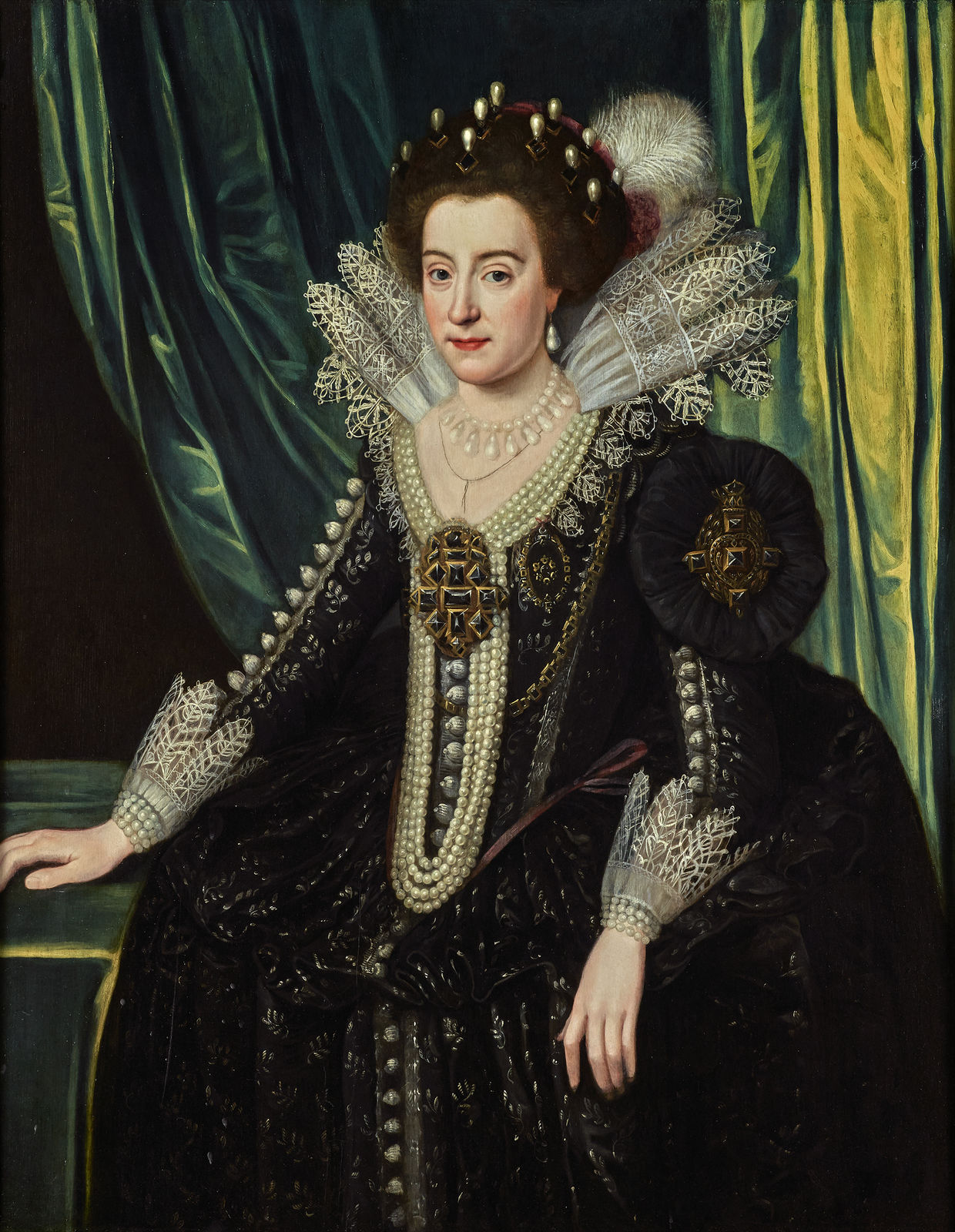
Elizabeth of Bohemia, ‘The Winter Queen’ (1596-1662)

Browse artworks

Studio of Michiel Jansz. van Mierevelueen’ in 1620s currently for sale at Philip mould & companyd portrait of Elizabeth of Bohemia The Winter Queen’ in the 1620s currently for sale at Philip mould & company

Studio of Michiel Jansz. van Miereveld

Elizabeth of Bohemia, ‘The Winter Queen’ (1596-1662), Early 1620s
Oil on Panel
44 ¾ x 35 in. (113.6 x 88.9 cm)
Philip Mould & Company
License Image
%3Cdiv%20class%3D%22artist%22%3EStudio%20of%20Michiel%20Jansz.%20van%20Miereveld%3C/div%3E%3Cdiv%20class%3D%22title_and_year%22%3E%3Cspan%20class%3D%22title_and_year_title%22%3EElizabeth%20of%20Bohemia%2C%20%E2%80%98The%20Winter%20Queen%E2%80%99%20%281596-1662%29%3C/span%3E%2C%20%3Cspan%20class%3D%22title_and_year_year%22%3EEarly%201620s%20%3C/span%3E%3C/div%3E%3Cdiv%20class%3D%22medium%22%3EOil%20on%20Panel%3C/div%3E%3Cdiv%20class%3D%22dimensions%22%3E44%20%C2%BE%20x%2035%20in.%20%28113.6%20x%2088.9%20cm%29%3C/div%3E
Elizabeth of Bohemia is one of the most romantic and tragic figures from the first half of the seventeenth century. She was in many ways the most popular member of the Stuart royal family, and was even known as the ‘Queen of Hearts’. Her life was dominated by successive tragedies, from the early death of her adored elder brother Prince Henry, followed by the execution of her other brother Charles, through to the loss of her short-lived kingdom, Bohemia, and finally the death of her husband when she was not even in her forties. And yet, Elizabeth’s ultimate triumph came after her death, for, following the expulsion of James II from England in 1688, it was her heirs, through her daughter Sophia’s marriage to the Elector of Hanover, that eventually became the ruling family of the United Kingdom.

Elizabeth was born in Scotland in 1596, but soon drew attention from all of Europe as the eligible daughter of the future king James I of England. After months of negotiation, and the dismissal of numerous suitors, she was married on Valentine’s day 1613 to Frederick V, the Elector Palatine, one of the most powerful German Protestant princes. The marriage was a key part of James I policy of straddling the growing gulf between Catholic and Protestant states through dynastic alliances. However, the wedding celebrations in London were somewhat low-key following the death of Henry, Prince of Wales a few months earlier. Elizabeth was distraught, and can be seen wearing in mourning a jewel given her by Henry on her sleeve (a practice which is presumably the origin of the phrase, ‘wearing your heart on your sleeve’).

For a time, Elizabeth enjoyed a great prosperity at Frederick’s court in Heidelberg. She was known for her extravagance, wit and beauty, and her relationship with Frederick was solid and happy. They had thirteen children in just nineteen years of marriage. Elizabeth’s future seemed assured when, in 1619, Frederick was offered the crown of Bohemia, which he accepted in Prague in October that year. However, only the following Spring Frederick’s forces were crushed at the Battle of the White Mountain by Spanish Habsburg armies in the continuing battles of the Counter-Reformation. Frederick and Elizabeth were thereafter known, somewhat disparagingly, as the Winter King and Queen.

Another blow soon befell Elizabeth when Frederick was forced into exile from his estates in the Palatine. The couple became royal refugees in Holland, dependent on charity and goodwill. Despite repeated pleas to her brother Charles I, to whom she was until 1630 heir presumptive, England would not intervene militarily on her behalf. As a result, her family was effectively forced into military employment, with Frederick fighting alongside the Swedes in Germany, and Rupert fighting for Charles I in the English Civil War. Two of her daughters became nuns. One son, Maurice, died as a privateer in the Caribbean. The death of Frederick V in 1632 capped a disastrous decade.

Nevertheless, despite, or perhaps because of, such setbacks, Elizabeth maintained a strong body of popular and political support throughout her life. She was careful to cultivate this with personal gifts, often of portraits, to her admirers. She regularly patronised Miereveld to this end, and later Gerrit van Honthorst. The present work was perhaps one such gift. The picture appears to be a replica of a work first painted by Miereveld shortly after Elizabeth’s marriage, and engraved by Bolswert in 1615. Elizabeth spent some time in The Hague after her marriage, where Miereveld was based. However, here the sitter appears to be slightly older than the teenager seen in Bolswert’s engraving. It is possible that the present replica was ordered from Miereveld’s studio sometime after Elizabeth had left the Netherlands on her journey first to the Palatinate, and then to Bohemia.


Read more
Elizabeth of Bohemia is one of the most romantic and tragic figures from the first half of the seventeenth century. She was in many ways the most popular member of the Stuart royal family, and was even known as the ‘Queen of Hearts’. Her life was dominated by successive tragedies, from the early death of her adored elder brother Prince Henry, followed by the execution of her other brother Charles, through to the loss of her short-lived kingdom, Bohemia, and finally the death of her husband when she was not even in her forties. And yet, Elizabeth’s ultimate triumph came after her death, for, following the expulsion of James II from England in 1688, it was her heirs, through her daughter Sophia’s marriage to the Elector of Hanover, that eventually became the ruling family of the United Kingdom.
Close full details

Provenance

The Dukes of Newcastle;

By descent to Henry Pelham-Clinton, 8th Duke of Newcastle, at Clumber;

Christie’s London, 31st March 1939, lot 35, 78 guineas;

Thence by descent, until sold;

Christie’s, London, 22 November 2006, lot 10;

Private collection, UK.

Exhibitions

Nottingham Castle, 1879 (lent by the 6th Duke of Newcastle, Clumber)

Share
  • Facebook
  • X
  • Pinterest
  • Tumblr
  • Email
Previous
|
Next
1303 
of  2054
Related artworks
  • English School, Portrait of a Lady wearing a Red Dress, 1617
    English School
    Portrait of a Lady wearing a Red Dress, 1617
  • English School, Portrait of Charles I (1600-1649), wearing the robes of the Order of the Garter, c. 1633-40
    English School
    Portrait of Charles I (1600-1649), wearing the robes of the Order of the Garter, c. 1633-40
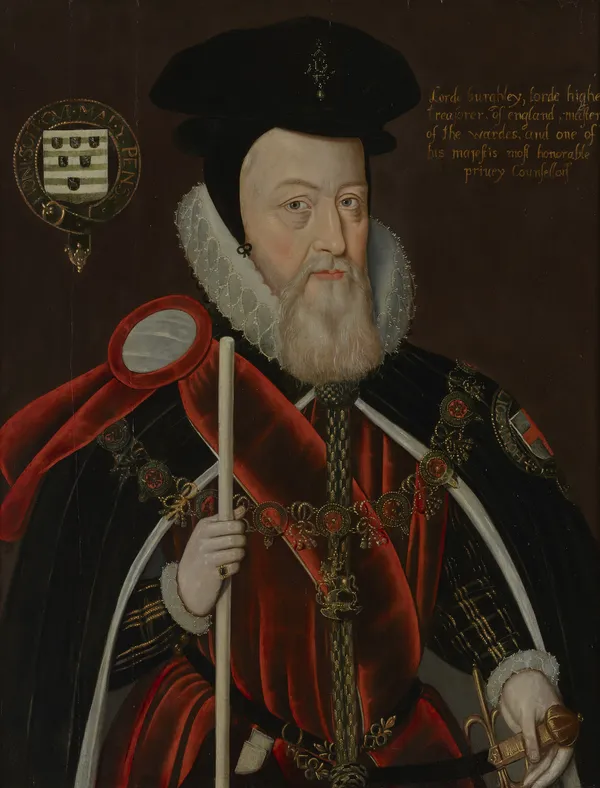
  • English School, Portrait of William Cecil, Lord Burghley (1520-98), Late 1590s
    English School
    Portrait of William Cecil, Lord Burghley (1520-98), Late 1590s
  • English School oil Portrait of a Lady wearing a Black Dress and Hat in 1629 currently for sale at Philip mould & company
    English School
    Portrait of a Lady wearing a Black Dress and Hat, 1629
PHILIP MOULD & COMPANY
CONTACT

+44 (0)20 7499 6818
art@philipmould.com

18-19 Pall Mall
London SW1Y 5LU

philipmould.com

FOLLOW US

Instagram

Facebook

TikTok

YouTube

Artsy


Join the mailing list
Manage cookies
Copyright © 2026 Picture Archive & Historical Portraits
Site by Artlogic

This website uses cookies
This site uses cookies to help make it more useful to you. Please contact us to find out more about our Cookie Policy.

Manage cookies
Accept

Cookie preferences

Check the boxes for the cookie categories you allow our site to use

Cookie options
Required for the website to function and cannot be disabled.
Improve your experience on the website by storing choices you make about how it should function.
Allow us to collect anonymous usage data in order to improve the experience on our website.
Allow us to identify our visitors so that we can offer personalised, targeted marketing.
Save preferences
Close

Be the first to hear about our available artworks

Interests *

Sign Up

* denotes required fields

We will process the personal data you have supplied in accordance with our privacy policy (available on request). You can unsubscribe or change your preferences at any time by clicking the link in our emails.